BDSM has a bit of a branding problem.
Mention it and some people immediately picture leather harnesses, elaborate rope setups, or scenes straight out of a movie. Others assume it's something reserved for the especially adventurous.
In reality, a lot of BDSM looks surprisingly ordinary.
It's a blindfold. A conversation about fantasies. A partner taking control for the night. A little restraint. A lot of trust.
Like most things in the bedroom, it exists on a spectrum, and what matters is that everyone involved is on the same page and having a good time.
So if you've been curious about bondage and BDSM but aren't quite sure where to start, consider this your invitation to explore without the awkwardness.
Key Takeaways
- BDSM is built on consent, communication, and trust.
- Bondage is one form of BDSM that involves consensual restraint.
- Safe words and boundaries help create a safer experience for everyone involved.
- Beginners can start with blindfolds, sensation play, or light restraints.
- Aftercare is just as important as the play itself.
- Curiosity is great. Communication is essential.
What Is BDSM? Defining the Core Concepts
BDSM is an umbrella term that covers a variety of consensual activities, relationship dynamics, and forms of play.
The acronym commonly stands for:
- Bondage and Discipline (B&D)
- Dominance and Submission (D/s)
- Sadism and Masochism (S&M)
That doesn't mean everyone who enjoys BDSM is interested in all three.
Someone might enjoy submissive roles without ever trying rope bondage. Another person might love bondage sex but have no interest in pain play. For many people, BDSM is less about specific activities and more about trust, communication, and exploring different ways to connect.
At the center of it all is consent.
Modern BDSM communities often emphasize principles like safe, sane, and consensual (SSC) or risk-aware consensual kink (RACK). They sound formal, but the idea is simple: everyone knows what's happening, agrees to it enthusiastically, and feels comfortable speaking up if something doesn't feel right.
Which, honestly, is advice that applies well beyond BDSM.
Understanding Bondage: Definition and Types, Why People Do It
Bondage is one of the most recognized forms of BDSM. It involves consensually restricting movement using restraints, ropes, cuffs, or other tools.
Sometimes it's purely physical. Sometimes it's psychological. Often it's a mix of both.
Ask ten people why they enjoy bondage and you'll probably get ten different answers.
For some, it's the anticipation. Knowing you can't predict the next touch has a way of making every sensation feel a little more intense.
Others enjoy the trust involved. Handing over control, or being responsible for someone else's experience, can create a level of connection that's hard to find elsewhere.
Then there's the sensory side of things. Limiting one sense often makes the others feel stronger. A blindfold, for example, can turn a simple touch into something far more memorable.
Bondage can take many forms, including:
- Rope bondage
- Soft restraints
- Handcuffs
- Spreader bars
- Sensory deprivation tools
- Different bondage positions
Not every experience needs to involve equipment, either. Sometimes the dynamic itself is what people find exciting.
The Cornerstone of Safe Exploration: Consent and Communication
One of the biggest misconceptions about BDSM is that it starts with restraints, toys, or techniques.
It doesn't.
It starts with a conversation.
The people who have the best experiences are usually the ones who spend time talking beforehand. What sounds exciting? What's completely off the table? Is there anything that feels intriguing but maybe needs a little more discussion first?
These conversations are often what makes the experience feel safe enough to enjoy.
A healthy dominant role isn't about ignoring someone's needs. A healthy submissive partner isn't expected to tolerate discomfort they didn't agree to.
The strongest BDSM experiences are built on communication long before anyone reaches for a blindfold.
Establishing Boundaries and Safe Words
Boundaries aren't there to ruin the fun.
They're what allow everyone to relax and enjoy it.
Before any BDSM play, discuss:
Hard Limits
Things that are completely off the table.
For example, someone might say:
- "I don't want to be blindfolded."
- "I don't want to use restraints."
- "I'm not interested in a dominant/submissive dynamic."
Soft Limits
Activities someone may be curious about but isn't ready for yet.
For example, someone might say:
- "I'd be open to trying a blindfold someday, but not tonight."
- "I'm curious about restraints, but I'd like to start slowly."
- "A dominant/submissive dynamic sounds interesting, but I want to learn more first."
Safe Words
A predetermined word that immediately pauses or stops the activity.
Many people use a simple traffic light system:
- Green: Everything feels good.
- Yellow: Slow down or check in.
- Red: Stop immediately.
If you're using sensory deprivation tools, such as a blindfold or if someone is ball gagged and unable to speak clearly, establish non-verbal signals as well.
A safe word only works if everyone agrees to respect it instantly. No exceptions.
Beginner-Friendly BDSM and Bondage Activities
If you're new to BDSM, there is absolutely no reason to jump straight into advanced rope work or elaborate scenes.
Most people start much smaller.
1. Blindfold Play
Sensory deprivation can heighten anticipation and make touch feel more intense.
A simple blindfold can completely change the experience without adding complexity. When you can't see what's coming next, even a light touch can feel surprisingly exciting.
2. Light Wrist Restraints
Soft restraints or silk ties can introduce the feeling of bondage in a low-pressure way.
Comfort comes first. The goal isn't to see how much you can endure. It's to explore trust, anticipation, and surrender in a way that feels good for everyone involved.
3. Power Exchange Through Conversation
Try exploring dominant and submissive dynamics through words, instructions, or role-based scenarios before adding physical restraint.
You might be surprised how much chemistry can come from simply giving direction, asking permission, or letting someone else take the lead.
4. Sensation Play
Experiment with different textures, temperatures, or forms of touch.
A feather, an ice cube, fingertips, or a body-safe vibrator perfect for teasing all over can all create completely different sensations.
5. Add a Little Glide
Most of the time when toys (or hands) are involved, you'll want a little lube in the mix. It can make every touch, tease, and sensation feel that much better.
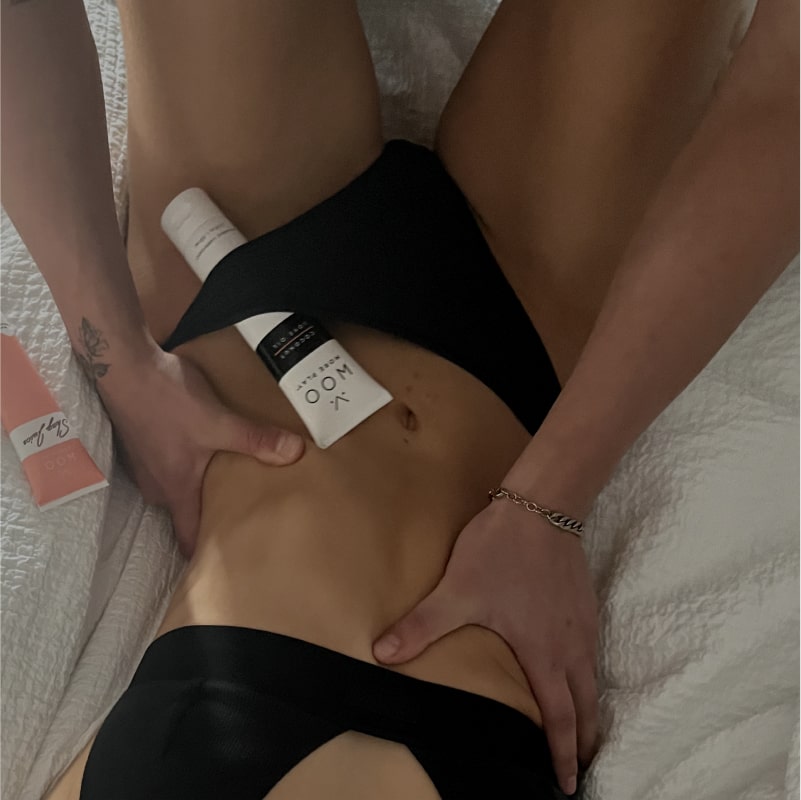
WOO has a lube for just about every scenario. Here’s your breakdown.
If you're focused on foreplay, massage, and full-body exploration, Love Oil is the obvious choice. Made with natural and organic ingredients, it's moisturizing, long-lasting, and perfect for condom-free play. It also happens to smell like vanilla cupcakes, which certainly makes things more tasty.
If condoms or toys are part of the plan, reach for Shag Juice. This water-based formula is toy-friendly, condom-compatible, and made with sensitive skin in mind. It's natural, hypoallergenic, and silky enough to keep things comfortable while you focus on the fun part.
Also designed for condom use, Dew Më is a luxury silicone-based lube. It's incredibly smooth and designed to last through shower play, extended sessions, and all-night adventures. Just leave the silicone toys out of this one.
Take your pick or try all three.
Essential Safety Considerations for Bondage
Exploration should feel exciting, not stressful.
When exploring bondage:
-
Never leave a restrained person unattended.
-
Keep safety scissors nearby when using rope bondage.
-
Avoid placing pressure on the neck.
-
Regularly check circulation in hands and feet.
-
Communicate frequently throughout play.
-
Start slowly before attempting more advanced techniques.
-
Learn proper restraint methods before using ropes extensively.
If something feels wrong, stop and reassess.
The Importance of Aftercare
Aftercare is one of the least talked-about parts of BDSM, which is funny considering it's often one of the most important.
Once the scene ends, the emotional and physical experience doesn't necessarily end with it.
Some people want cuddles. Some want water and snacks. Some want to talk through what they loved, what surprised them, and what they'd change next time.
There's no universal formula.
The point of aftercare is simply checking in and making sure everyone feels supported once the adrenaline fades.
For many couples, those conversations become just as valuable as the experience itself.
FAQs
Is bondage the same thing as BDSM?
Not exactly. Bondage is one part of BDSM and focuses on restraint or limiting movement. BDSM is a broader umbrella term that can include bondage, power exchange, role play, sensory play, and other consensual activities.
Is BDSM safe?
BDSM can be safe when it's practiced with clear communication, enthusiastic consent, and an understanding of potential risks. Many people follow frameworks like safe, sane, and consensual (SSC) or risk-aware consensual kink (RACK) to help ensure everyone's comfort and safety.
Why do people enjoy bondage?
People enjoy bondage for different reasons. Some love the anticipation and heightened sensations, while others enjoy the trust, vulnerability, or power dynamics involved. For many, it's less about the restraints themselves and more about the connection they create.
What should BDSM beginners try first?
Blindfold play, sensation play, and light restraints are often considered beginner-friendly BDSM activities. Starting with simple experiences allows you to learn what you enjoy without feeling overwhelmed.
Can you use sex toys during BDSM play?
Absolutely. Many couples incorporate vibrators, restraints, blindfolds, and other accessories into their BDSM activities. The key is choosing products that feel comfortable, body-safe, and aligned with your shared boundaries.
Final Thoughts
Bondage and BDSM don't have to be intimidating.
A little curiosity, open communication, and a willingness to explore together can go a long way. Whether you're experimenting with a blindfold, a new dynamic, or simply having conversations you've never had before, the best experiences are built on trust.
And if you're looking to make things a little smoother, WOO More Play has everything you need for better play—no ropes required.